



















Fun Facts About Chickens

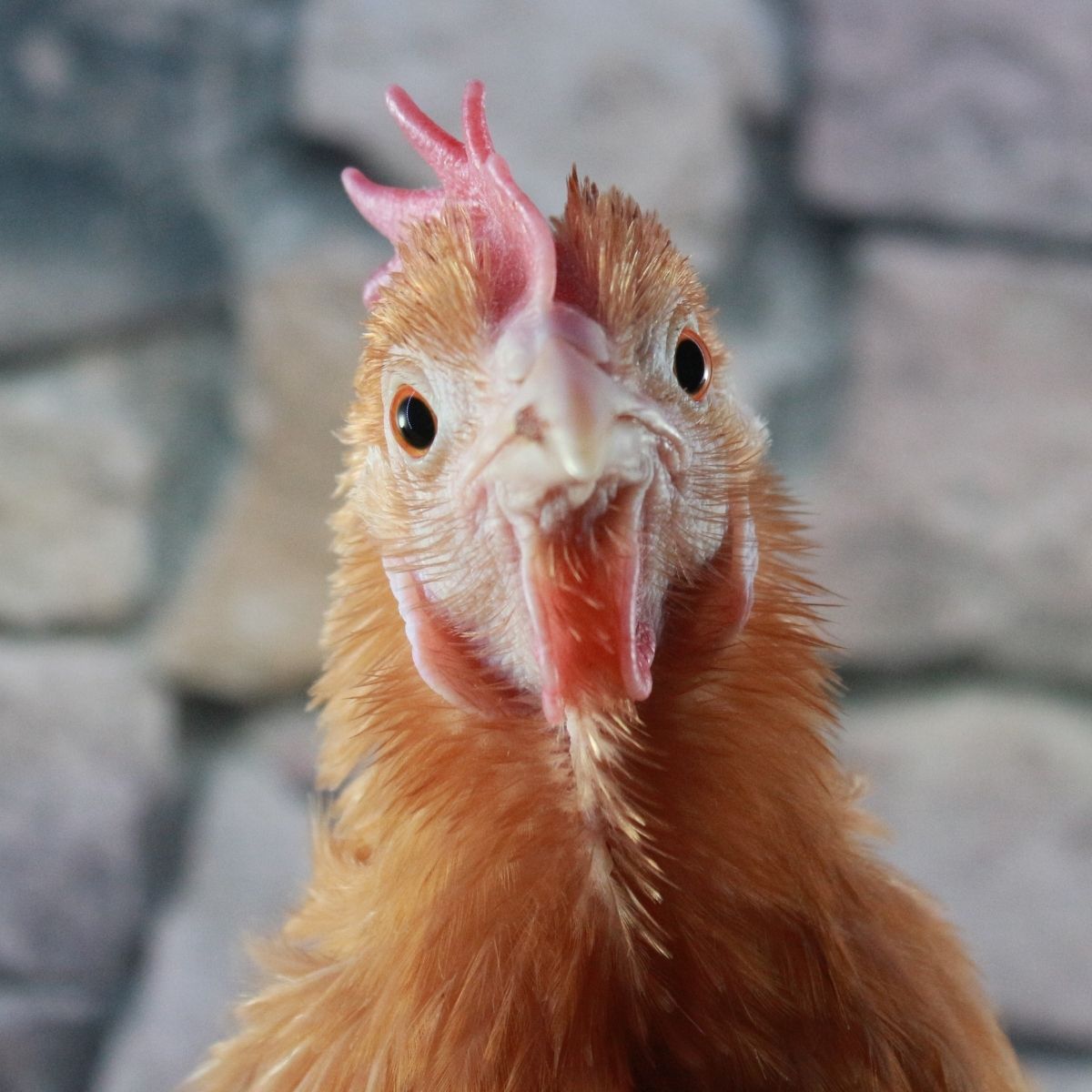
They cluck, peck, and scratch around in the dirt. But chickens are so much more than background characters on a farm—or worse, faceless ingredients in a recipe. Beneath the feathers and the farmyard stereotypes, these birds are social, clever, and full of surprises.
Some people will go their whole lives without really seeing a chicken. Not on their terms, anyway. In the animal agriculture industry, billions of chickens are bred, raised, and killed every year with little regard for their lives beyond efficiency and output. But when you pull back the curtain—when you meet a chicken, watch her dust bathe in the sun, or hear her trill to her friends—it changes you. They’re not just “livestock.” They’re someone.
Whether you’re a longtime vegan or just here for some trivia, we hope this guide on fun facts about chickens offers a new way to see them. Not just for what they are—but for who they are.
Quick List of Fun (and Interesting!) Chicken Facts
Here are some of our favorite fun facts about chickens to get you started:
- Chickens recognize faces—both human and chicken
- Hens cluck to their babies before they hatch
- Chickens can count and do simple math
- They use over 24 distinct vocalizations
- Chickens learn by watching each other
- Roosters call hens over when they find food
- Chickens form close friendships and social hierarchies
Let’s Take a Closer Look!
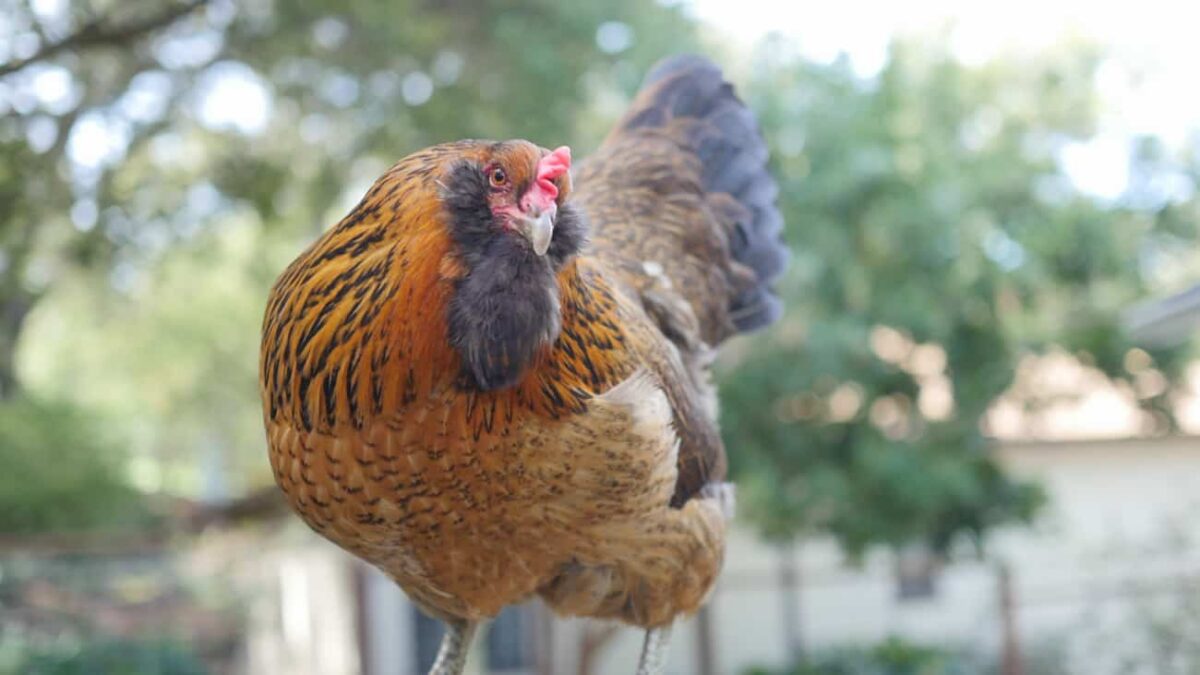
Each of these fun facts about chickens opens a window into how chickens live, think, and relate to the world around them. So let’s slow down and scratch beneath the surface—because the more you learn about chickens, the harder it is to see them as anything less than remarkable.
Chickens Recognize Faces and Friends
To us, one chicken might look a lot like the next. But to chickens, the faces in their flock are as distinct as fingerprints. They can recognize and remember up to 100 individuals—human and chicken alike—using a combination of facial features, voice, and behavior. That’s not just memory; it’s social intelligence.
This ability helps chickens navigate their flock dynamics. They remember who’s a friend, who’s a rival, and who they’d rather avoid at the feeder. Researchers have found that chickens not only distinguish between familiar and unfamiliar faces, but also retain those memories for extended periods—similar to what’s been observed in some mammals.
It’s a striking thought, especially when you consider that most chickens in the food system never even meet their mothers or see the light of day. In natural settings, they form tight-knit groups, build trust, and respond to one another with nuance. Recognition is a form of relationship—and chickens, it turns out, are deeply relational creatures.
Mother Hens Are Fiercely Protective
The term “mother hen” didn’t come out of nowhere. Hens are among the most devoted and protective parents in the animal kingdom—long before their chicks even hatch.
While sitting on her clutch, a mother hen softly clucks to her unborn babies. Chicks inside the eggs actually peep back—starting a pre-hatch dialogue that helps them recognize their mother’s voice before they even see her. One recent study found that exposure to these clucks shapes chicks’ behavior days after hatching, highlighting how deep that bond begins.
Once hatched, the chicks stay close, tucking under her wings when they’re cold or frightened, learning to forage from each step she takes. And if danger approaches? Hens will puff up, scream, and charge—fully prepared to protect, no matter the size of the threat. It’s primal, unwavering motherhood.
In commercial hatcheries, this powerful maternal instinct is completely ignored. Chicks are pulled from eggs and raised under lamps, without the warmth of feathers or the bond of clucks. Knowing what hens are capable of makes that loss all the more poignant.
Chickens Can Do Basic Math (Yes, Really!)
It turns out chickens don’t just peck and scratch—they problem-solve. In studies with newly hatched chicks, researchers found they could distinguish between larger and smaller numbers, even when objects were hidden and moved between screens. Without training, these baby birds tracked quantity and chose the side with more items—an ability linked to early arithmetic.
This skill isn’t limited to chicks. Adult hens have shown signs of logical reasoning, self-control, and even an understanding of object permanence—knowing something exists even when it’s out of view. These are cognitive benchmarks we often associate with mammals, not birds.
In nature, this kind of intelligence has real-world value: figuring out which foraging patch offers more food, or recognizing patterns in their flock’s behavior. But in the animal agriculture industry, there’s no opportunity to use that intelligence. Birds are bred for output, not curiosity. And yet, it’s still there—quietly encoded in their evolution, waiting to be noticed.
They Use Over 24 Distinct Vocalizations
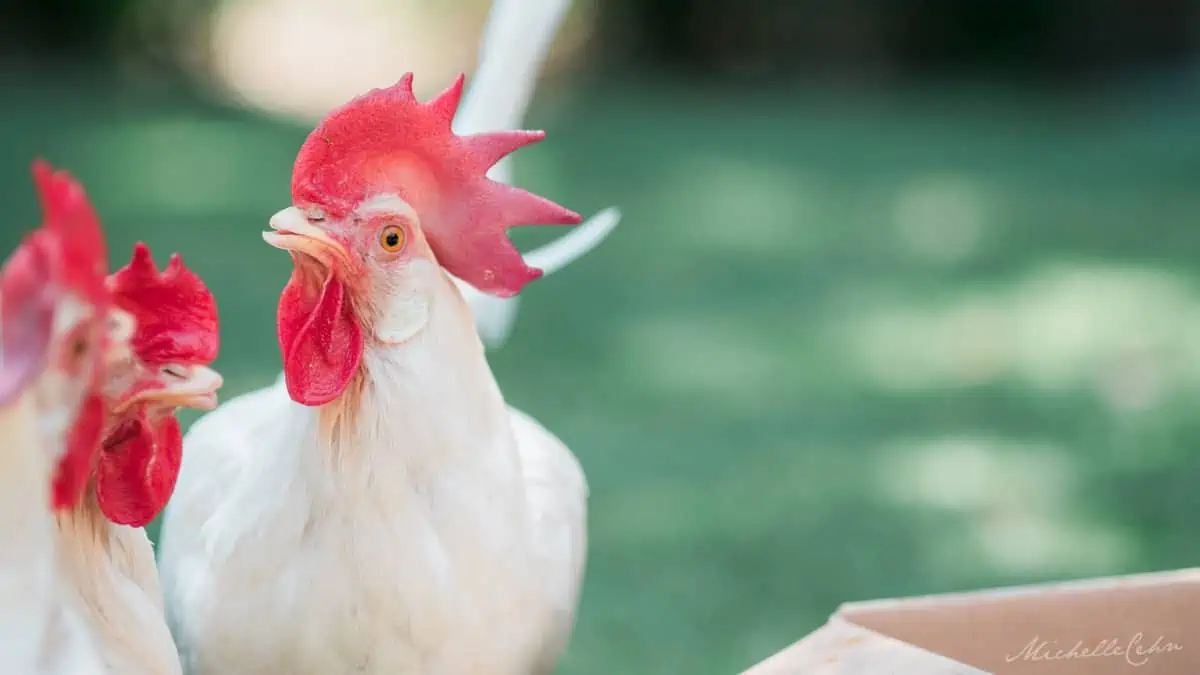
Chickens aren’t silent creatures. They chatter, trill, cluck, growl, and squawk—and every sound means something. Researchers have cataloged at least 24 unique vocalizations in chickens, each tied to a specific context: contentment, danger, hunger, mating, or discovery.
They even distinguish between different types of danger. If a predator is approaching from the sky, chickens issue a specific alarm cry. If the threat is coming by land, they sound the alert differently. This tells their flock how to react—whether to scatter or freeze.
Roosters in particular are surprisingly vocal. When they find something tasty—say, a patch of bugs or seeds—they’ll call hens over to share. It’s one part food alert, one part courtship. But the behavior shows awareness, communication, and intent.
On factory farms, chickens are housed in loud, overcrowded buildings where their natural vocalizations are often drowned out or ignored. But in backyard flocks or sanctuaries, you’ll hear it: a full language unfolding in feathers and sound. It’s one of the most surprising fun facts about chickens—and a reminder that they’re constantly communicating.
Chickens Learn by Watching Each Other
Chickens are natural-born observers. They’re not just instinct-driven—they’re fascinated by the world around them and learn through watching their flockmates.
In one experiment, hens seen pecking a specific-colored key to unlock a food reward passed this behavior on to others. Chickens that watched a trained bird learned the correct peck more often than those who hadn’t—no direct instruction needed. In another classic study, chicks avoided bitter-tasting beads simply by watching others react—a clear sign of learning through observation, not taste alone.
This is social learning in action—matching traits we often attribute only to primates or mammals. Chickens aren’t mindless; they’re thoughtful, sharing cues and knowledge across the pecking order.
Sadly, this intelligence goes largely unused in industrial systems. Birds are often packed together with no room to explore or emulate. Yet given space, time, and role models, chickens flourish—learning quickly, adapting creatively, and surprising humans.
Roosters Call Hens Over When They Find Food
When a rooster finds something delicious—a juicy bug or a cluster of seeds—he doesn’t just gobble it up. Instead, he performs a ritual called tidbitting: a rhythmic motion of his head with occasional dropping of the food item, sometimes accompanied by clucks. It’s a clear signal to hens: “Come check this out!”
Lab studies have shown that even silent tidbitting—the visual part without sound—elicits more foraging behavior in hens than other types of motion. This suggests the display carries referential meaning, guiding hens to food sources.
In the wild, this behavior serves more than eating—it builds trust, reinforces bonds, and even boosts a rooster’s appeal to hens. It reflects awareness, intention, and social intelligence. But in most farming operations, roosters are absent—and these finely tuned communication systems are lost.
Chickens Form Close Friendships and Social Hierarchies
Chickens don’t just coexist—they build relationships. In flocks, they form strong bonds, develop preferences for certain companions, and even show signs of distress or withdrawal when a close companion dies.These behaviors aren’t just interpretations. Studies show hens respond with empathy to distressed chicks, and countless backyard keepers and behaviorists report strong social bonds and grief‑like responses when flockmates die.
Every flock has its own rhythm. Chickens establish what’s known as a pecking order—a stable social structure that defines who leads, who follows, and who prefers to quietly keep the peace. While there can be jostling for status, flocks tend to settle into routines, with individuals developing distinct personalities and roles.
In sanctuary settings, chickens have been known to follow their favorite friends around the yard, share dust baths, and roost side by side at night. If one is injured or distressed, the others may hover close or vocalize in concern. That’s more than instinct—it’s empathy in action.
Sadly, these behaviors are almost impossible in commercial operations, where space is limited and social structures are constantly disrupted. But when chickens are given the freedom to just… be, they form lives that look a lot more like community than we’ve been led to believe.
FAQs
Some of the most interesting facts about chickens include their ability to recognize over 100 faces, communicate with more than 24 vocalizations, and form close friendships. Hens cluck to their babies before they hatch, and both hens and chicks can learn by watching others—showing signs of social intelligence.
Yes—chickens can recognize and remember individual humans. They use facial features, voice, and behavior to identify people they trust, and studies show they can distinguish over 100 different faces.
Chickens are surprisingly intelligent. They can count, solve problems, learn from each other, and even understand social hierarchies. Their intelligence often goes unnoticed, but it’s clear once you take a closer look.
Final Thoughts: Seeing Chickens Differently
Chickens are not mindless. They’re not machines or commodities. They are communicators. Teachers. Mothers. Friends.
For many of us, chickens have only existed on a farm, behind glass, or maybe even on your plate. But the truth is: they’ve always had rich, complex lives. If learning these facts gave you pause, that’s a good thing. Curiosity leads to connection. And connection changes everything.
As philosopher Jeremy Bentham wrote, “… the question is not, Can they reason? nor, Can they talk? but, Can they suffer?” It turns out chickens are capable of all of these.
Check out our video to see some of these fun facts about chickens in action!
Related Articles on Animal Advocacy and Compassionate Living



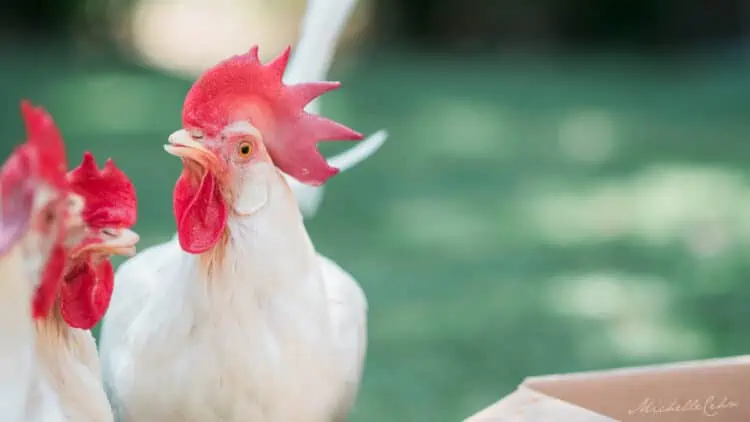
We hope you learning some fun facts about chickens in this article! If you have any to add, please share them in the comments!
You may also like...



Enter to Win Our Monthly Giveaway!
New winner every month! Drop your name below for a chance to win hundreds of dollars of vegan prizes from our brand partners. You’ll also receive our weekly e-newsletter with plant-based recipes galore!
Leave a Comment